
Drill bits are indispensable rock cutting tools widely used in underground mining and shaft drilling projects. In raise boring, blind shaft drilling and general mine borehole construction, the performance of a drill bit directly determines drilling speed, hole quality and overall project cost. Mining contractors need reliable drill bits to handle complex geological formations, from soft coal and shale to hard granite and abrasive rock layers. Selecting the correct drill bit is one of the most important decisions before starting any mine drilling operation.
How does a mining drill bit work for underground drilling?
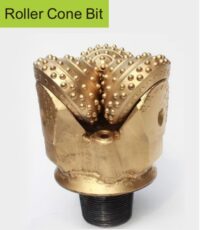
A drill bit is installed at the front end of the mining drill rod string. Driven by rotary torque and axial pressure transmitted through drill rods, the cutting structure of the drill bit continuously breaks rock. Different types of drill bits adopt different rock breaking mechanisms. Roller cone drill bits rely on rolling cutters to create impact and compression force to crush rock, while fixed cutter bits use sharp cutting teeth to shear rock formations. Broken rock cuttings are carried away by flushing medium to keep the borehole clean and reduce wear on the drill bit.
There are several common types of drill bits for mine drilling applications. Roller cone drill bits are popular for medium to hard rock drilling. They feature multiple rotating cones with hardened teeth, good impact resistance and strong adaptability to uneven strata. PDC drill bits use polycrystalline diamond cutters, delivering high penetration rates in soft to medium-hard rock and coal measures. For raise boring pilot hole drilling, small diameter roller cone drill bits are commonly matched with mining drill rods to complete pilot hole drilling before reaming with a reaming head.
The service life and efficiency of a drill bit are affected by material quality, tooth design and heat treatment process. High-quality mining drill bits adopt high-strength alloy steel body and wear-resistant cutting elements. Optimized tooth layout helps distribute rock breaking load evenly, reduce vibration and avoid premature tooth chipping or bearing failure. A well-designed drill bit also has reasonable fluid passageways for efficient cutting removal, which prevents bit balling and reduces the risk of stuck pipe.
How to choose the suitable drill bit for your mine drilling project
When picking a drill bit, engineers need to evaluate key parameters including rock compressive strength, borehole diameter, drilling depth and the power rating of your drilling rig.
For hard and abrasive rock formations: Roller cone drill bits with reinforced carbide teeth are recommended to withstand continuous impact and abrasion.
For soft to medium rock and coal mines: PDC drill bits are preferred for fast penetration and stable drilling performance.
Regular inspection of cutting teeth, nozzles and bit body after every drilling run helps identify damage early. Proper maintenance can maximize the service life of your drill bit and lower total drilling costs.
We supply a full range of heavy-duty drill bits tailored for mining drilling works. Our drill bits are compatible with common mining drill rods, raise boring machines and underground drilling rigs. Whether you need drill bits for pilot hole drilling in raise boring projects, coal mine exploration or metal mine shaft drilling, our durable drill bits offer consistent rock cutting performance to help mining teams complete drilling tasks safely and efficiently.