
A Tragedy Caused by a Drill Pipe
Deep-resource development is growing. Deep-well operations in coal and metal mining are increasingly common. The deeper the well, the higher the quality requirements for drill pipes. During bottom-up reaming with a raise boring machine, the cutterhead can weigh up to 20 metric tons. It can be 3 to 4 meters in diameter and rotate at extremely low speeds. The drill pipes must withstand enormous torque and tensile forces.
If a drill pipe breaks, the section below the fracture falls into the pilot hole. The cutterhead then falls and becomes damaged. Retrieving broken drill pipes is time-consuming. If retrieval fails, economic losses can be significant. The pilot hole may need to be re-drilled, and new drilling tools must be procured. Costs can quickly become overwhelming.
Why Drill Pipe Breaks Are So Expensive
Drill pipe breakage often occurs without obvious warning signs. Statistics show that more than 80% of mechanical component failures are due to fatigue failure. Fatigue failure occurs without noticeable deformation beforehand. The fracture process is extremely brief and cannot be detected in time.
The purchase price of a single drill pipe is almost negligible compared to total losses from such an incident. What is truly costly is downtime. Based on the daily operating cost of a large surface drilling rig, direct losses from one day of downtime—plus indirect project delays—are enough to purchase dozens of high-end drill pipes.
What High-Quality Drill Pipes Must Deliver
Therefore, experienced contractors are especially cautious when selecting drill pipes. High-quality drill pipes must possess exceptional tensile strength, corrosion resistance, fatigue resistance, and wear resistance. They must remain free from deformation or fracture even in unstable and harsh rock formations.
Real-Life Examples
In 2018, a major safety incident occurred at a mine in Australia. The cutterhead of a super-heavy-duty shaft drilling rig was being hoisted upward to enlarge the borehole. It plummeted 198 meters from the top of the shaft to the bottom. Fortunately, strict adherence to safety isolation protocols prevented any casualties.
How Do Drill Pipes Break?
1. Joints are the areas most prone to damage
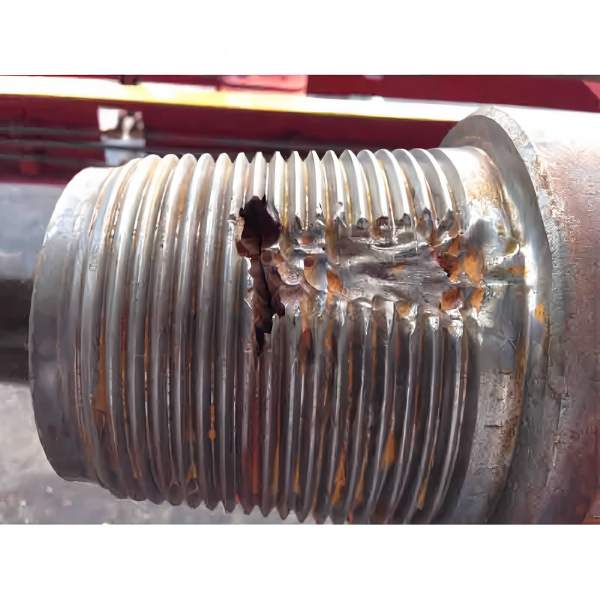
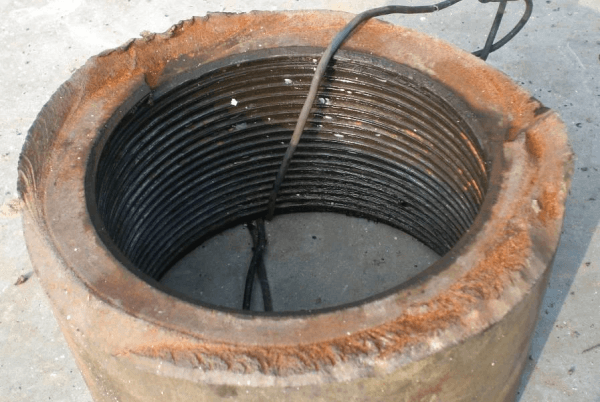
According to specialized studies conducted by academia and in engineering field settings on drill pipe failures in reverse-circulation drilling rigs, more than 80% of drill pipe drop and breakage failures occur precisely at the roots of the first and second threads of the drill pipe connections, or within the heat-affected zone of welded drill pipes—particularly in the case of damage to male couplings. This is because the threads of the joints squeeze against each other under pressure, generating high stress; furthermore, the high precision requirements for the threads make machining difficult, leading to potential issues. At the same time, under the combined effects of alternating loads and corrosive media, the probability of microcracks initiating at these stress concentration points or potential damage sites is significantly higher than in other parts of the drill pipe.
2. Alternating stress is the primary culprit
Take a piece of bendable wire. If you bend it back and forth, subjecting it to frequent tensile and compressive forces, the wire will eventually break. This is known as alternating stress. When a drill pipe bends, one side is under tension while the other is under compression, and the stresses on both sides alternate as the pipe rotates. The magnitude of the stress difference depends on the dogleg angle and the drill pipe diameter—the greater the dogleg angle, the larger the stress difference between the two sides of the drill pipe, and the more likely fatigue damage is to occur.
(Dogleg angle: The total change in wellbore angle over a standard length,typically 30 meters or 100 feet.)
How can we counteract alternating loads on drill pipes(fatigue and fracture)?
This is very important—high-quality drill pipes must pass extreme fatigue testing and G2.5-grade dynamic balance testing.
1. Ultimate Fatigue Testing
This test involves subjecting drill pipes to repeated, long-term cyclic stresses (such as compression, tension, bending, and torsion) to determine the number of stress cycles they can withstand before failure, or to conduct destructive engineering tests to determine their fatigue limit. This ensures that the drill pipes can withstand n cycles of high-load alternating stresses during actual construction operations.
2. G2.5 Dynamic Balance Test
This is a rotational balance grade established by the International Organization for Standardization (ISO 1940). The G2.5 grade represents a high-precision, high-performance level of industrial balancing. It is typically used for high-speed, high-performance rotating machinery or equipment that requires extremely smooth operation. It reduces the additional vibrations generated during high-speed rotation, which can cause tens of thousands of instances of friction and impact stress on the bearings and drill pipes adjacent to the rotating components.
LK Integral Drill Pipes Designed Specifically for Raise Boring Machines
Features:
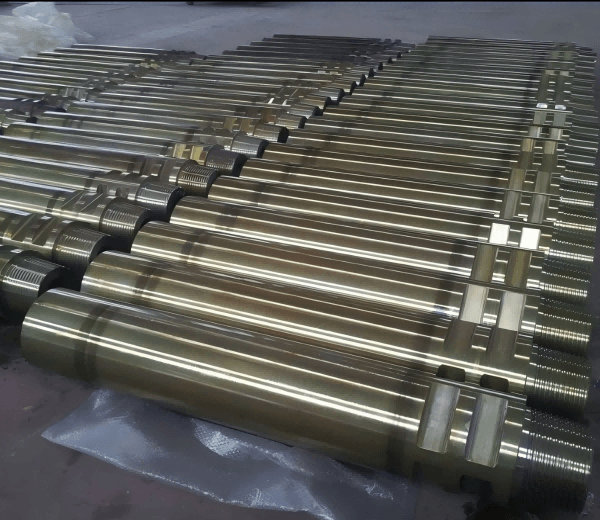
1. Integrated Design
These drill pipes are forged as a single piece using high-strength alloy steel forgings that undergo precision machining to ensure a seamless, integrated structure. They are heat-treated, resulting in completely uniform yield strength and tensile strength throughout the entire pipe. This eliminates, at the physical source, the risk of brittle fracture in the heat-affected zone inherent in friction welding.
2. R.B.-DI22 Heavy-Duty Thread Design
From an industry trend perspective, standard threads and API oil drill pipe threads are gradually being replaced by new, specialized thread designs due to various drawbacks. The R.B.-DI22 thread is specifically designed for the drill pipe connection structure of surface drilling rigs. Each thread is a double-start thread, and its taper and coarse thread pitch are optimized for applications involving high loads and frequent stress cycles.
Basic Info:
| Certifications | ISO 9001:2000, BV Ship Welding Procedures |
| Standards | AISI, ASME, GB, ASTM |
| Surface Treatment | Surface Phosphating |
| Manufacturing Process | Forging |
| Material | Alloy Steel |
| Production Process | Forging, Heat Treatment, Lathe Machining |
| Heat Treatment | Quenching and Tempering |
| Surface Hardnes | Hb 325–365 |
| Dimensions | 8“–15” |
| Minimum Tensile Strength | 1035 MPa |
| Yield Strength | 965 MPa |
| Minimum Impact Value | 90 joules |
Size and technical Specification:
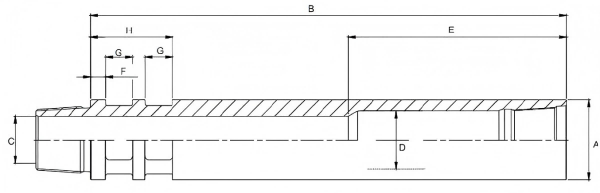
Norminal size | Shoulder to shoulder Length | Small bore diameter | Diam.of boreback | Length of boreback | Shoudler to first spanner flat | Width of spanner flat | Shoudler to end of spanner flats | Dimension across spanner flat | Connections |
| A | B | C | D | E | F | G | H | ||
| inmm | inmm | inmm | inmm | in mm | in mm | inmm | inmm | in mm | |
| 8″203.2 | 48″1219.2 | 4-3/4“120.7 | 65/32″156. 4 | 22”558.8 | 11/2″38.1 | 23/4″69.9 | 81/4″209.6 | 67/8″174.6 | 63/4″R.B.-DI22 |
| 10″254 | 60”1524 | 4-3/4″120.7 | 77/16″188. 9 | 36″914.4 | 11/2″38.1 | 23/4″69.9 | 81/4″209.6 | 8″203.2 | 81/4″RB-D122 |
| 11- 1/4”286.8 | 60″1524 | 4-3/4″120.7 | 711/16″195 .3 | 36″914.4 | 11/2″38.1 | 31/2″88.9 | 10″254 | 9″228 | 91/4″R.B.-DI22 |
| 12- 7/8″323.9 | 60”1524 | 57/16″138. 1 | 9″228.6 | 36″914.4 | 19/16″39.7 | 315/16″100 | 11″279 | 101/2”266. 7 | 101/2″RB.-D122 |
| 12- 7/8″323.9 | 120″3048 | 57/16″138. 1 | 9”228.6 | 96″2438.4 | 19/16″39.7 | 315/16″100 | 11″279 | 101/2”266. 7 | 101/2″R.B.-DI22 |
The catalog covers a full range of nominal sizes from 8“, 10”, 11 1/4“, 12 7/8”, to 15″. Whether you’re working with a lightweight, compact raise boring machine or a hundred-metric-ton-class giant reverse-circulation system, we can provide precisely matched R.B.-DI22 components with individual weights ranging from 170 kg to 1,270 kg and thread sizes from 6 3/4“ to 10 1/2”, perfectly suited for all types of complex geology and well depths.
LK three Key Competitive Advantages:
1. Comprehensive Drilling Rig and Drill Pipe Services
We provide one-stop, end-to-end overseas solutions for drilling rigs and drill pipes to clients in multiple countries. Our drill pipes feature China’s top-tier drilling tool manufacturing technology and are backed by a comprehensive, robust supply chain integration system.
2. Multiple International Compliance Certifications
We provide comprehensive English-language quality inspection reports and compliance certificates. Furthermore, all process designs strictly adhere to mainstream standards, with quality inspections integrated into the manufacturing process to eliminate defective products at the earliest stage.
3. Technical Guidance
We offer “comprehensive” after-sales technical guidance services, providing you with drilling tool maintenance manuals, usage recommendations, and inspection guidelines.
Summary
Problem arises—Cause—Solution
What strikes fear into the hearts of many drilling contractors is hearing an unusual noise coming from the drill pipe. When a drill pipe breaks, it usually means the entire project will come to a standstill, resulting in the loss of both intangible time and tangible funds with every passing second.
The root of the problem lies in alternating stress and fatigue—drill pipes endure repeated impacts from tension, compression, bending, and torsion downhole, and the threaded joints become the weakest link due to stress concentration. The greater the dogleg, the more severe the stress differential, causing microcracks to form silently until a sudden brittle fracture occurs.
The integrated drill pipes we provide address this challenge at its root: seamless forging eliminates the risk of fracture in the heat-affected zone; the R.B.-DI22 heavy-duty thread, with its double-ended, coarse-pitch, and optimized taper design, evenly distributes immense torque; and extreme fatigue testing combined with G2.5-grade dynamic balancing ensures that every drill pipe operates reliably under the most demanding conditions. Backed by international certifications such as ISO and BV, along with end-to-end quality traceability, we deliver not just a product, but a commitment to safety.