
In raise boring, roller cone bits are used during the pilot hole stage before reaming. They are one type of pilot bit. As projects and mining operations grow worldwide, roller cone bits appear more often on sites. The industry now recognizes them widely.
The main reason is deeper, harder rock. This creates demand for bits with strong rock-breaking ability, stable performance, and high drilling efficiency. Tungsten carbide insert bits meet these needs. They work with many rig types and are used in oil and gas, mining, water conservancy, and urban infrastructure.
During rotary drilling, tungsten carbide insert bits impact, crush, and shear rock. They work in soft, medium, and hard formations. Tooth type divides them into steel-tooth and insert-tooth bits.
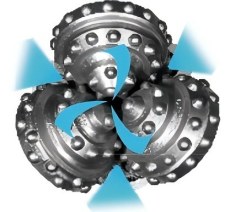
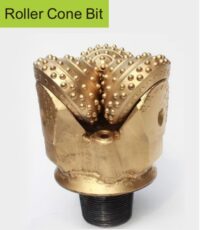
A tungsten carbide inserts bit has several main parts: the bit body, tooth claws, roller shaft, cones, teeth, bearings, lubrication system, and nozzles. The number of cones also classifies bits: single-cone, three-cone, or assembled multi-cone. The three-cone type is the most widely used worldwide.
Its three cones are arranged in a staggered pattern. This improves downward stability and reduces deviation. It also minimizes vibration and extends bit life. As a result, the drilling industry favors tungsten carbide insert bits.
Standard drill bits are inefficient in hard rock. Steel teeth are not strong enough for stubborn rock. Tungsten carbide insert teeth offer better wear resistance and sharpness. They are the best choice for rock drilling.
First, assess the rock hardness in your project. Then select the cutting material based on that hardness. This helps control costs.
Insert teeth come in many shapes: wedge, spherical, conical, and flat-top. Sharp-tipped teeth suit hard rock. Flat-tipped teeth suit soft rock.
Different shapes suit different geology. High-efficiency teeth may wear quickly. Long-lasting teeth may drill slowly. Balance drilling efficiency and service life. This gives the best configuration for Tungsten Carbide Insert Bits.
Industry knows this rule: D + B + H = a constant. D is roller size, B is bearing thickness, and H is tooth height. To gain one performance feature, you must sacrifice another.
Large cones are common in soft rock. They provide greater cutting force. Small cones are common in hard rock. They provide greater vertical pressure. Proper arrangement balances force among cones. This reduces vibration and wear in tungsten carbide insert bits.
Bearing size + roller shell thickness + tooth height = constant.
Bearings support and transmit force. Most mechanical power systems use them. Inside a tungsten carbide insert bit, bearings are the final load-bearing parts. They work under high pressure and speed. They set the maximum drilling pressure and speed. Hard rock drilling needs very high pressure. Therefore, bearing quality is especially important.
The sealing system protects internal bearings. It blocks sand, cuttings, rock fragments, and water. It keeps lubricant in and balances pressure.
The industry commonly uses two sealing systems: rubber O-ring seals and metal face seals. They differ in contact surface material, wear resistance, and drilling conditions.
Seal failure starts a chain. Cuttings enter. Bearings wear quickly. The cone seizes. Teeth stop rolling and drag on rock. Alloy teeth chip badly. The bit is scrapped.
Bearings can fail first too. Then cones become loose. Seals compress, deform, or tear. Seals fail. Bit failure speeds up. This is why tungsten carbide insert bits need reliable bearings and sealing.
These bits focus on bearing load capacity and cutting geometry. They are available in the IADC 40-80 series. They suit various geological conditions. Main sizes range from 6 1/4″ to 16″. Their quality ranks among the best in the world.
Wellbore diameter is fixed. Bearing, housing, and tooth dimensions must trade off. These bits are equipped with the Bearing Load Capacity Optimization System (BCCM). It aims to maximize bearing life and cutting efficiency.
The system is highly flexible. Engineers use this digital platform to simulate and analyze bearing configurations. They compare them in depth. This does not compromise roller shell rigidity or tooth arrangement. It adjusts bearing load capacity to the best state.
Open-pit mines or Pilot hole drilling need high-speed drilling. These bits feature industry-leading air bearings. This design maximizes load capacity. It improves reliability and reduces thermal wear. It extends bit life even in extreme high-speed or high-impact conditions. It also ensures stable drilling power.
Some environments are harsh. They have high abrasiveness, heavy dust, and water spray. These tungsten carbide insert bits use Titan Pro Series sealed bearings.
This series uses proprietary O-ring sealing. It creates a bidirectional barrier. Outside, it blocks hard rock debris and impurities. Inside, it keeps high-quality grease from leaking. This sealing performance prevents early bearing failure. It improves bit performance and reliability. It gives bits long-lasting endurance in hard rock.
These bits use a systematic design for tooth profile and arrangement. Alloy tooth profiles, exposed height, diameter, and material grades are selected and combined. This upgrades the cutting structure.
Precise tooth placement is used. Tooth row position is optimized with software and physical tests. This minimizes blind spots between teeth. This eliminates the tracking effect. Every rotation fractures rock uniformly and efficiently. It raises rock-breaking efficiency to new heights.
The core advantage of tungsten carbide insert bits is systematic optimization. It connects carbide inserts, cone structure, and bearing/sealing system. The bits are designed for hard, abrasive formations. Steel teeth wear rapidly there. The inserts provide superior wear resistance. They keep a sharp edge and resist impact. They fracture rock efficiently in quartzite, iron ore, and chert.
Bit performance depends on insert geometry and placement. These bits select insert profiles by formation hardness: wedge, spherical, conical, and flat-top. Sharp-tipped inserts suit hard rock. They concentrate stress and penetrate efficiently. Flat-tipped inserts suit softer formations. They maximize cutting area. Insert diameter, exposed height, and material grade are matched. This balances penetration rate and wear life.
Precise tooth placement and row positioning reduce dead zones. They eliminate tracking effects. Every insert fractures rock uniformly each rotation.
Even the best tungsten carbide insert bits fail if bearings and seals fail. These bits integrate air bearings for high-speed open-pit drilling. They also use Titan Pro sealed bearings for harsh, abrasive environments. Proprietary O-ring sealing creates a bidirectional barrier. It blocks cuttings and prevents lubricant loss. This stops the failure chain: seal failure, bearing wear, cone seizure, and tooth damage. The BCCM system maximizes bearing load capacity. It does not compromise roller shell rigidity or insert arrangement.
These tungsten carbide insert bits come in sizes from 6 1/4″ to 16″. They use standard API connections. They combine durable inserts, optimized cutting geometry, and reliable bearing/sealing technology. As a result, they deliver higher penetration rates, longer bit life, fewer trips, and lower cost per hole. They set a global benchmark for hard-rock drilling efficiency.